Chaim Lerner
Here There Is No WhyChaim Lerner stands at the center of Here There Is No Why: The Death and Life of Chaim Lerner as a famous public intellectual, radical theologian, teacher, and Holocaust survivor. His decisive significance lies in the collision between the life-affirming witness of his books and the violent, compromised man revealed by those who knew him privately. The question of whether Chaim Lerner killed himself first appears to organize his story, but the investigation ultimately exposes a more difficult truth: his death was not a straightforward act of suicide, but the consequence of an assault interrupted by Michal, followed by a cover-up that allowed the police ruling to stand.
Identity and Formation
Chaim Lerner’s authority rested above all on his status as the sole survivor among the four Auschwitz companions whose experiences he recounted. During his time as a slave laborer at Buna, the Auschwitz rubber factory, he remembered a fellow prisoner smuggling in a mealy apple. The four men hid behind a machine, risking punishment or death, and divided the fruit into four pieces. Chaim later described the juice and pulp as an encounter with God. The apple became a compact version of his theology: even in the machinery of extermination, a small material pleasure could interrupt total darkness and make life appear miraculous.
Another Buna memory connected bodily deprivation with the return of the human world. Chaim and his companions dragged a repurposed Mercedes bus engine up the stairs to a civilian supervisor’s office and encountered a young female secretary, the first woman they had seen in nearly a year. His testimony moved between hunger, labor, fear, sexuality, and wonder, treating the smallest perceptions as evidence that the prisoners’ inner lives had not been entirely destroyed. These recollections made him a witness, but they also made him an interpreter of survival rather than merely a recorder of atrocity.
His most famous book, Our Imperfect God, became a bestseller in the United States and Israel. Judah Loeb, who worked on the manuscript, received an unexpectedly prominent acknowledgment, listed second, before Zehava and Yoav. Chaim’s first acknowledgment went to Michal, whom he called his most careful reader. The acknowledgments reveal a network of intellectual dependence beneath the image of the solitary sage: his public work was shaped by readers, students, family, and collaborators, even as his reputation encouraged the belief that his authority belonged to him alone.
Theology and Public Authority
Chaim’s central theological project was to rescue God from the charge of omnipotence. In his teaching, he presented the “Three Irreconcilable Statements” about God: that God is omnipotent, that God is benevolent, and that evil exists. He treated the contradiction among these propositions not as a puzzle to be hidden but as the starting point for religious thought. His God was not an all-powerful ruler who could simply have prevented Auschwitz, cancer, earthquakes, or every human catastrophe. Chaim instead imagined a God who wants to help, suffers with creation, and remains limited by forces beyond divine control.
This position made him vulnerable to Meir Alon’s attack. Alon accused him of claiming ownership over the Shoah and of treating his own stories as the only legitimate stories of the Holocaust. In Alon’s hostile account, Chaim had invented a “shlepper God,” a God as schlemiel whose powerlessness became the object of worship. Alon also called him the “Saint of Auschwitz,” turning survivor authority into a charge of arrogance. The labels show how quickly Chaim’s theology was converted into a moral caricature: saint, fraud, or defender of divine weakness, with little room left for contradiction.
Chaim’s conception of spirituality was fundamentally interrogative. Discussing the Zohar, he explained the word “Mi,” meaning “who,” as a name of God. The phrase “Who created these?” therefore becomes not merely a question but a statement that God, whose name is “Who,” created the universe. To invoke God is to ask, search, and remain engaged in inquiry. His theology did not promise a final answer; it made questioning itself a form of religious life. This principle also gives the novel its governing tension, because Chaim’s death cannot be settled by the first explanation supplied by police, journalists, or admirers.
Teaching, Charisma, and Exploitation
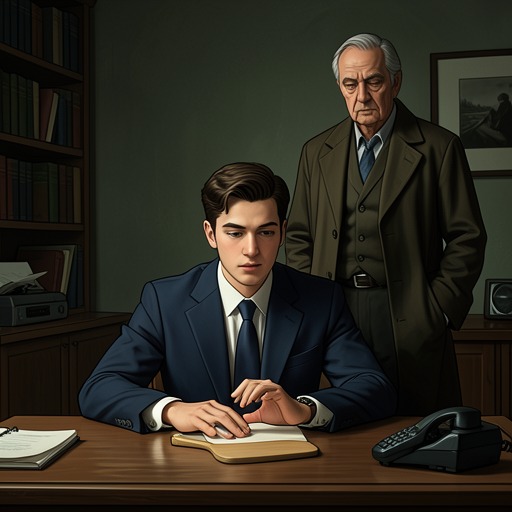
Chaim’s first personal meeting with Judah occurred outside a class, where Michal introduced them. He smiled and clasped Judah’s hand in two warm fists, presenting an immediate contrast to the demonic figure Judah had imagined before meeting him. His charm was not incidental to his influence. He could make ignorance seem interesting rather than disqualifying, draw students into difficult theological arguments, and turn personal attention into a form of intellectual seduction.
Zehava later told Judah that Chaim wanted his students to worship him, including male students, and exhausted his charm on them. His authority therefore operated through intimacy as much as through books or lectures. The same charisma that created disciples also enabled exploitation. During the marriage, Chaim initiated repeated affairs with young graduate students, often boasting about them to Zehava and showing her Polaroids, including sexually explicit images. He averaged approximately one student a month, although many students refused him. The pattern exposed the distance between the righteous public survivor and the self-indulgent man who used his fame, age, and academic position to pursue vulnerable admirers.
Chaim’s public identity as Israel’s moral hero intensified the cruelty of this private conduct. His survivor status functioned as both testimony and shield: the “Saint of Auschwitz” could present himself as the bearer of collective memory while treating the people closest to him as extensions of his appetite and reputation. The novel does not erase his intellectual achievement, but it refuses to let achievement absolve domination.
Trauma, Family, and Moral Burden
Chaim’s Holocaust trauma did not emerge immediately in his marriage. Zehava said the nightmares began ten years after the wedding, when Yoav was eight, an age at which a child could absorb a parent’s terror. For almost three years, Chaim kicked, groaned, and cursed in Polish between one and three in the morning. Zehava could neither soothe him nor wake him safely. The nightmares made the past physically present inside the household and transferred its force to the next generation.
Yoav later understood his own history through a horrifying reversal. He imagined that the nightmares of the Nazi past had skipped a generation: he, rather than Chaim, had become the child-killing Nazi. After shooting two Lebanese boys during military service, Yoav believed that he had forced his father to confront the return of the violence Chaim had survived. In Yoav’s account, Chaim could not live with what his son had done and killed himself because of him. Whether or not this interpretation was factually correct, it shows how Chaim’s survival became a burden inherited by his son, transforming historical memory into personal guilt.
Judah eventually described the Lerner family as the narrative center of his own life. Chaim represented the Holocaust and the foundational trauma of Jewish history; Zehava represented the heroic rebirth associated with the Zionist project; Yoav carried the burden of the next generation. Michal belonged inside that symbolic family as well, not only because of her intimacy with Chaim and Zehava but because her actions would determine the truth of Chaim’s death. Chaim thus became both a person and a historical symbol, and the novel repeatedly shows the danger of allowing the symbol to consume the person.
Death, Concealment, and Reassessment
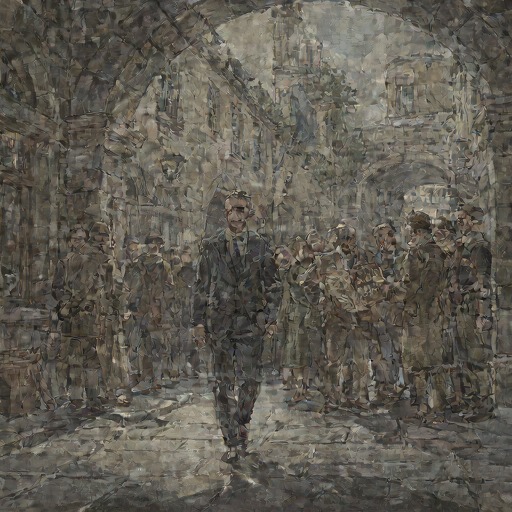
Chaim’s body was found on a starry spring evening near his bus stop, crumpled on the cobblestones with his head bleeding profusely. He was motionless, and the police ruled the death a suicide. Yet the circumstances created immediate doubt: there was no note, the method seemed unlikely, he had been planning for the future, and his demeanor during the fatal week had been genial, even joyful. His writings supplied still stronger resistance to the suicide explanation. In “Moments of Reprieve,” his memory of an apple slice presents joy as a refusal to surrender completely to chaos; the darkness, his work suggests, is never total.
Many influential American writers nevertheless treated the death as suicide. Bella Shmozic called Chaim “the six million and first victim, and the eighth Holocaust writer,” placing him in a grim sequence that included Paul Celan, Tadeusz Borowski, and Primo Levi. This interpretation made Chaim’s death the delayed completion of Auschwitz: a wound planted in the past, activated decades later by trauma, depression, aging, and loss. It also reduced the ambiguity of his death by fitting him into a recognizable category, the survivor-writer who ultimately dies by his own hand.
The later testimony of Michal overturns that public account. Chaim had called her a lying bastard, and she answered that the ashes of Auschwitz were ashamed of him and that he had disgraced his family’s dust. When he raised his hand to strike her, she caught it, twisted it, and pushed him toward the balcony railing. Because of his bad knee and hip, he lost his footing, struck the top bar shoulder first, and fell. Michal’s action was defensive, but the fall was fatal. Her account identifies Chaim’s death as a killing caused by resistance to his violence, while Zehava’s subsequent concealment preserved the false appearance of suicide.
The final reassessment does not make Chaim’s life coherent or innocent. It places the Holocaust survivor, theologian, abuser, father, teacher, and victim in the same frame. His death was not simply the final proof of trauma, nor simply the punishment of a hypocrite. It was the violent end of a man whose public teaching insisted on complexity even as his private life produced consequences that others had to carry. The statement that Chaim never would have killed himself therefore becomes less a sentimental defense than a challenge to every convenient label attached to him.
Narrative Role and Significance
Chaim’s legacy is mediated through competing forms of testimony: his books, his classroom explanations, family recollections, hostile journalism, Judah’s investigation, and the silence surrounding the death. His own account of survival emphasizes the apple, the fragment of sweetness, and the possibility of reprieve. Other voices emphasize arrogance, sexual predation, nightmares, military guilt, or concealed violence. None of these perspectives can safely replace the others.
His theology gives the narrative a formal as well as thematic principle. If God’s name is a question, then Chaim’s death must remain an inquiry rather than a settled moral slogan. The book asks whether a survivor’s suicide would be the delayed victory of the Holocaust, whether theology can become fatal, and whether a life-affirming philosophy can coexist with cruelty. It answers by refusing a single explanation. Chaim’s life contains genuine witness and genuine harm, spiritual insight and abuse of authority, compassion for the destroyed and violence toward the living.
Chaim is therefore not only the subject of Judah’s book but the force that makes its investigation necessary. He teaches that darkness is never complete, yet his own conduct darkens the lives around him; he seeks to rescue God from omnipotence, yet those who survive him must confront the limits of human responsibility. His ending leaves behind not a clean verdict but the demand to distinguish history from myth, testimony from reputation, and explanation from excuse.